
SANTA FE REPORTER
2020 Santa Fe Independent Film Festival: ‘Shiva Baby’ Review
Pray for relief
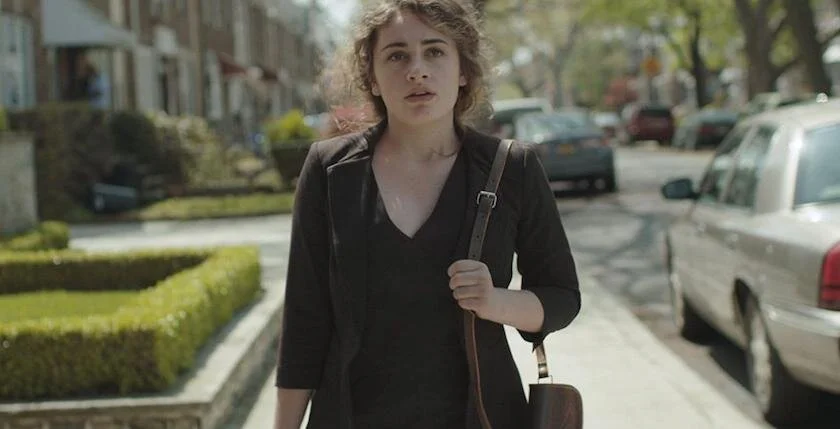
Where on Earth did Rachel Sennott come from? The young actor's credits include a handful of shorts and some upcoming television work, but after her performance in Shiva Baby from writer/first-time director Emma Seligman, she should probably just be allowed to do whatever she wants—she's a natural.
Here Sennott plays Danielle, a shiftless young Jewish woman flailing in college, working as a sugar baby and struggling on the cusp of late-millennial adulthood when she's forced to sit shiva for someone she doesn't even know at the behest of her parents (the always delightful Fred Melamed and a completely brilliant Polly Draper). There, her former girlfriend Maya (Molly Gordon) waits with pricks and barbs loaded; there an army of Jewish mothers make constant note of her fluctuating weight; there she learns her sugar daddy (Danny Deferrari) also knew the deceased, and he's brought along a wife and child Danielle never knew he had.
What follows is a relentless assault of familial and community pressure, Jewish family politics, hysterics and borderline horror movie levels of stress as Danielle's lies about college, her future career and her life come undone around her. Her mother needles endlessly, her sugar daddy acts like he's the wronged party—she can't even eke out a moment for a snack without comment. It's all punctuated by veteran film and television composer Ariel Marx's minimal but Hitchcockian score which takes a mere couple strings and builds a kind of tension that elevates an already sharp comedy into cinematic gold.
Yes, Shiva Baby is quite funny, but in scenes where Danielle's eyes go dead and the flop sweat trickles down her cheeks, a building, stabbing barrage of the absurd feels all too harrowing and all too relatable. Sennott dominates despite notable turns from the entire cast (shoutout to Dianna Agron as the sugar daddy's wife who may or may not know about Danielle) right up until the very last seconds wherein Seligman pulls us out of the perilous nosedive, leaving an open-ended bit of mystery hanging silently alongside one of the most meaningful moments of hope ever captured on film.
By Alex De Vore
SANTA FE REPORTER
2020 Santa Fe Independent Film Festival: ‘El Último Balsero’ Review
Welcome to Miami
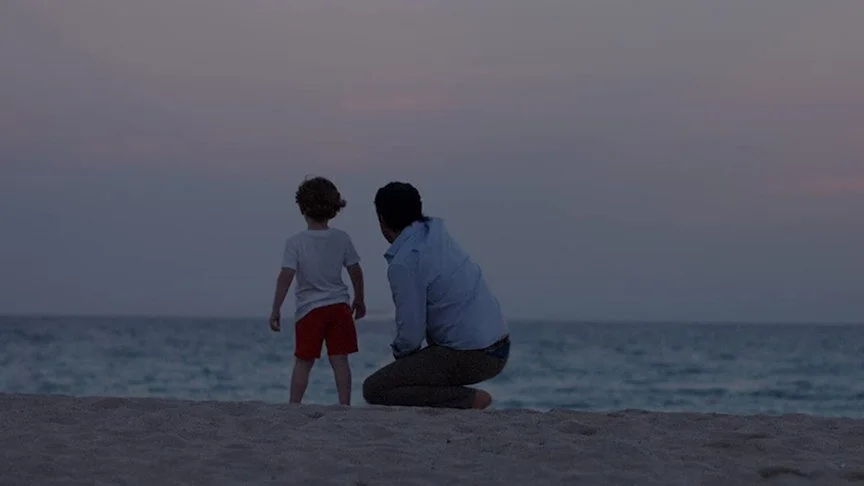
The beginning scenes of El Último Balsero (The Last Rafter), filmed in the emerald waters of the Florida Straits, demand immediate attention. It's there that main character, Ernesto (Héctor Medina), arrives in Miami in a tiny raft in 2016—just as President Barack Obama ends the "wet foot, dry foot" policy in an effort to improve diplomatic relations with the Cuban government. The longstanding legislation allowed that Cubans, as long as even a single toe touched American soil, be allowed to pursue residency a year later.
Directors Carlos Rafael Betancourt and Oscar Ernesto Ortega get the story going quickly as Ernesto navigates the painful and terrifying realities of a brand new immigrant. He comes to the US just as the country is beginning to navigate the Trump presidency. In the span of just a few days, Ernesto experiences homelessness and racism, and the frustration and disappointment of not having a way to become a resident. He also confronts a capitalist system that seemingly doesn't want him unless he's able to perform backbreaking and dangerous labor for pennies.
It's a far cry from home where Ernesto worked as a professor of philosophy at the University of Havana, but he's looking for his gay father, who left the country years before to escape the work camps forced on LGBTQ people by the Revolution.
Ernesto immediately meets Lenin (Chaz Mena), a queer Cuban man who, it turns out, knew Ernesto's father well. Lenin eventually reveals that Ernesto's father is already dead and that he only had a son from a forced sexual relationship.
Betancourt and Ortega take viewers with Ernesto as he traverses the multilayered city of Miami: judgment from Cubans who emigrated years before, the dangerous work forced on immigrants, as well as the colors, protests, coladas, domino games and entrancing salsa music that make up the multicultural city.
By the end, it's easy to root for Ernesto to work it out with his love interest and find a place in 2016 America. The last scenes hint at a rough road ahead for the curly-haired, thoughtful philosopher, as he finds his way between where he can never return and a future where he might never hold his own American passport.
By Katherine Lewin

SANTA FE REPORTER
2020 Santa Fe Independent Film Festival: ‘Margaret Atwood: A Word after a Word after a Word is Power’ Review
Adoring documentary recounts the writer's tale behind author Margaret Atwood
Watching author Margaret Atwood walk a hallway at a book event in the 21st century trailed by helpers dressed as red-cloaked handmaids provides a satisfying tableau of a writer whose fame and influence coalesced around her 1985 dystopian novel, The Handmaid's Tale, which famously imagined a society codified by religious intolerance and misogyny. The scene comes in the latter half of a biopic documentary about the author that comes close but does not quite stitch up the parts of Atwood's story.
Atwood says in the documentary she never envisioned becoming a popular writer, she just wanted "to be a good one." She became both, a "cultural and literary rock star," as one of many people interviewed for the film notes, who will "be read forever." The film travels with Atwood and her partner and fellow Canadian writer Graeme Gibson—who died last year—as they traveled the world attending literary events and speaking engagements, while also visiting the set of the television production of The Handmaid's Tale. Throughout, the film interweaves Atwood's life trajectory, from a childhood in the Canadian wilderness to her education at Harvard and her career as a writer. Her love of nature, cathected at a young age, combined with her natural and uncanny intelligence shape the narrative of a singular mind and sensibility fixed on the destruction wrought by the human tendency to seek and abuse power.
Atwood has said many times—including to SFR in a 2009 interview—that she's not a prophet. But her prescience, particularly in the novel that catapulted her to fame, has only deepened over time. The film—which offers a taste of biography, hagiography and craft observations—is at its most engaging during its dissection of that book, its filmic adaptations, cultural influence and, as we learn in the movie, Trump-inspired sequel. It runs shy of delving deeply into the massive critical and academic canon Atwood's work has inspired, but fully captures the arch and inspiring human whose work has meant so much to so many of us.
By Julia Goldberg